

What to Expect in the Serengeti: Weather, Activities & Experiences
December 5, 2025
Safari Safety & Rules for Safaris in East Africa
December 17, 2025
Ask any of our guides what guests ask most right before heading out, and it’s rarely about logistics—it’s always: “What is it actually going to feel like out there?”
Gorilla Trekking Timeline
Here is a quick look at how your day unfolds on the trail, from dawn preparations to evening recovery
Note: Timings are flexible and subject to change based on gorilla movements, forest terrain, and weather conditions on the day of your gorilla trek.
Step 1: Pre-Trek Morning Routine
Your morning starts early. Breakfast is served around 6:30 AM, and proper fueling is essential. You’ll want a warm, hearty meal alongside local coffee or tea to build steady energy for the hours ahead.
At this stage, your lodge team coordinates key logistics—ensuring your packed lunch is sealed, your drinking water is filled, and your driver-guide is ready to head to park headquarters. Where you stay plays a huge role in how smoothly this hour goes. If you stay far from your trekking sector, the day starts earlier than it needs to. Because Bwindi is vast, staying close to your assigned sector helps you avoid unnecessary early starts. It is one of those practical choices that does not sound glamorous, but on trekking morning, it matters a lot.
Once breakfast and lodge logistics are wrapped up, a short transfer brings you directly to the park sector headquarters for the official morning program.
Step 2: Briefing
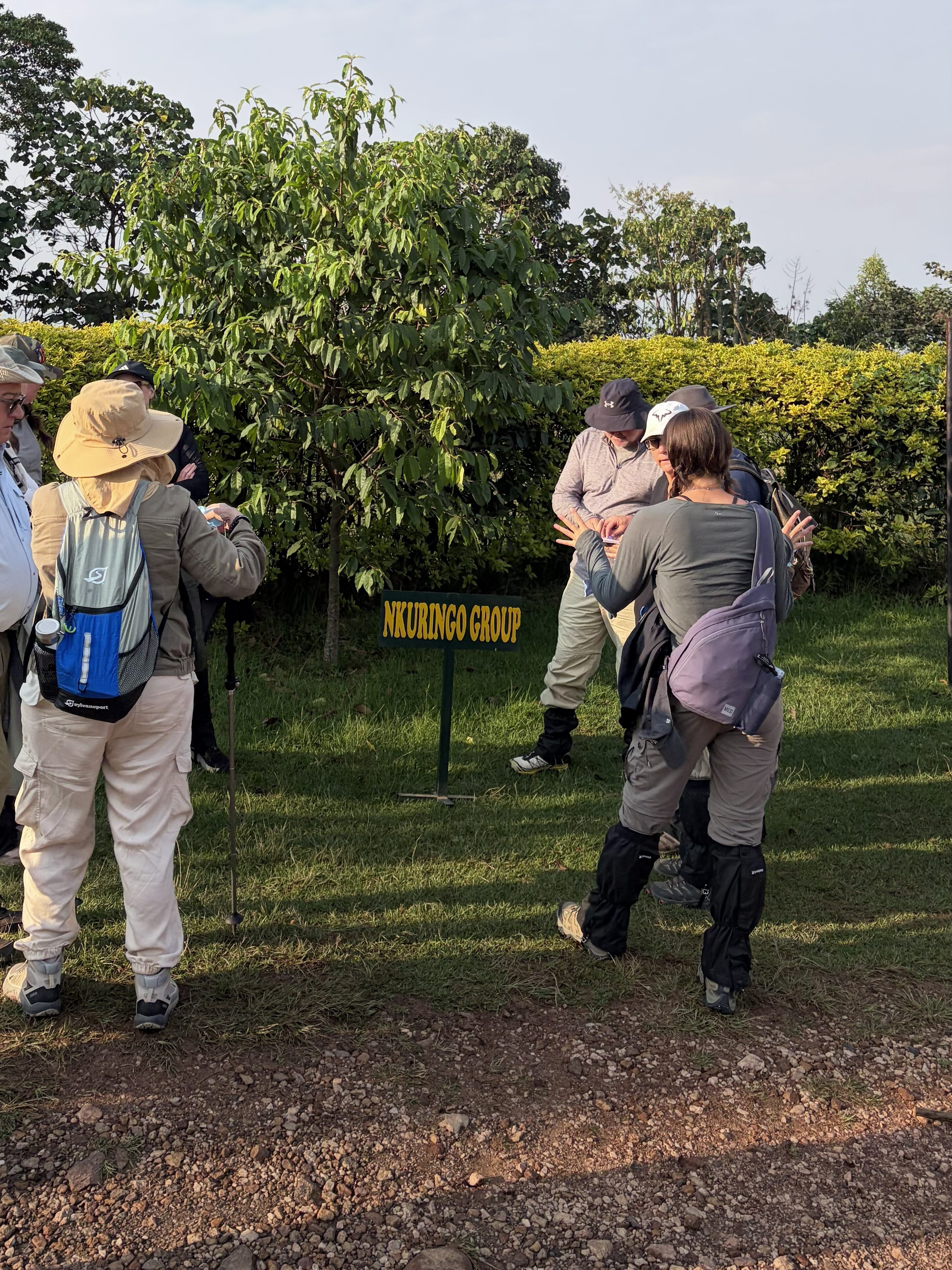
Tourist briefing (Bwindi)
By 8:00 AM, all trekkers assemble at the official ranger station. The atmosphere is vibrant—filled with anticipation, warm greetings, and steaming coffee as park wardens cross-reference permits and documentation.
During this session, park wardens establish clear trail protocols:
- Strict Grouping: Guests are divided into small, exclusive groups of no more than 8 people per habituated gorilla family to minimize ecological disturbance.
- Fitness-Based Placement: Wardens carefully evaluate individual fitness levels and preferences. If you desire a shorter route or a less demanding incline, this is the exact time to inform your guide or ranger.
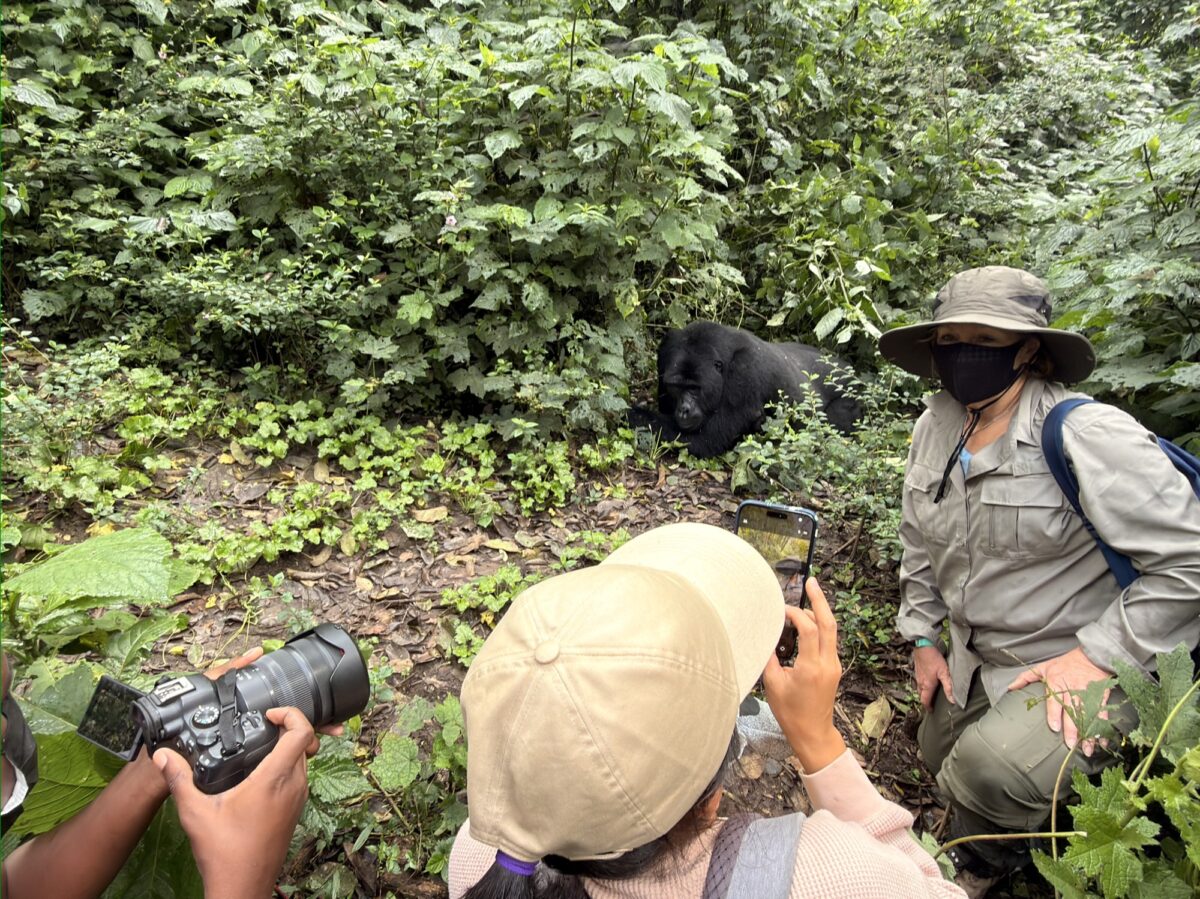
- Forest Etiquette: You will review vital wildlife guidelines—maintaining a strict 10-meter distance, keeping voices low, turning off camera flashes, and turning away if you need to cough or sneeze—and you will also receive your face mask instructions: It must be kept in your pocket during the hike and slipped on the moment your ranger says so.
Step 3: Trekking in the Impenetrable Forest
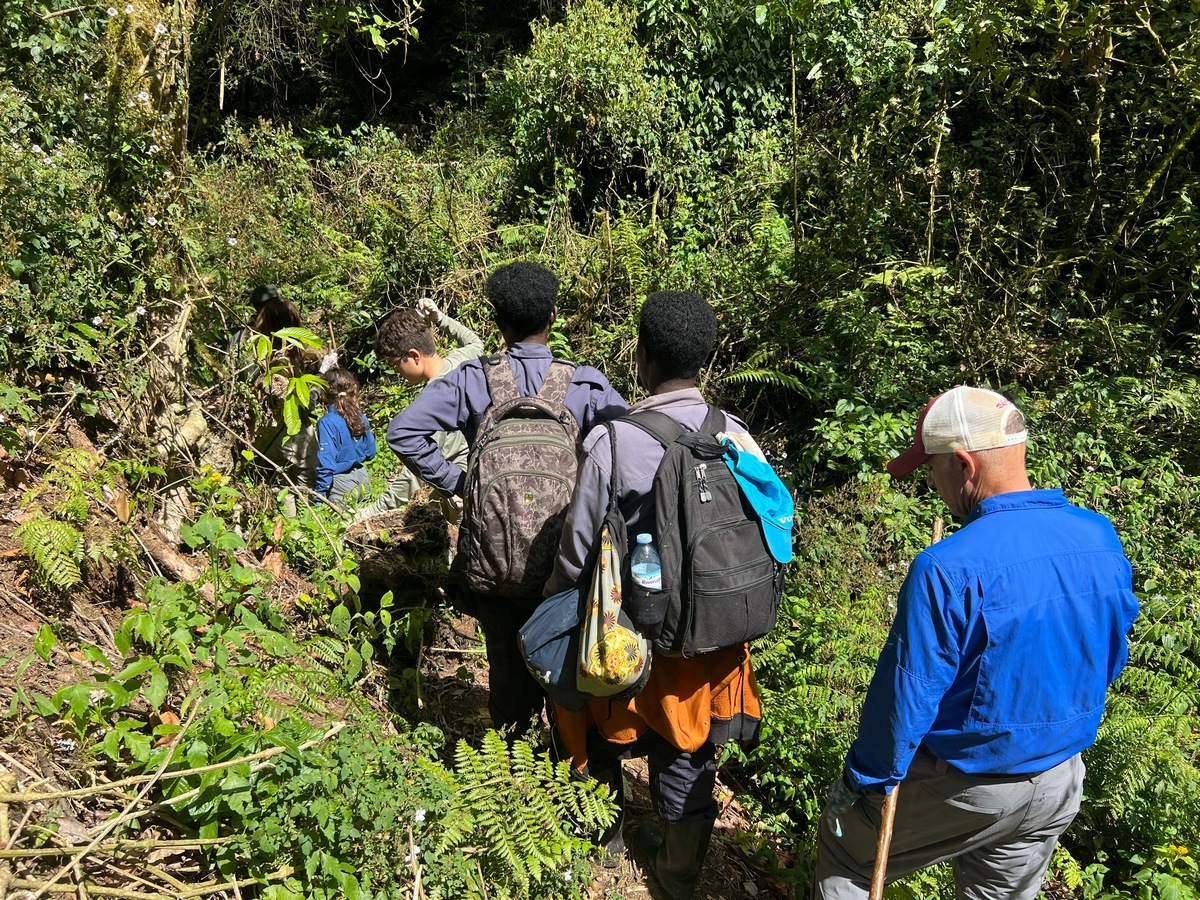
At 8:30 AM, after the ranger briefing, groups head out to their starting points. Depending on where your assigned gorilla family was last tracked, some groups walk directly into the forest straight from headquarters, while others take a short safari vehicle transfer to a trailhead further along the park boundary. If your group drives, this is where your safari driver-guides bid you farewell and wish you well on your gorilla trek before handing you over to your lead park ranger and trackers.
Stepping across the forest line directly into the wilderness. You will immediately notice how untamed the terrain is—with damp soil, thick foliage, and steep, muddy slopes that test your legs. With no established footpaths in the deep canopy, lead rangers and trackers use machetes to carve fresh trails directly through the dense brush.
A porter is optional. Many trekkers hire one to carry a daypack and help over the steep, muddy sections, and the $20 fee goes to a local household near the park. If you are fit and travelling light, you can manage without.
As you push deeper into the forest, your trackers stay focused on the ground and surrounding vegetation. Because wild mountain gorillas move constantly in search of bamboo shoots, fruit, and wild celery, the tracking team relies on subtle forest clues—fresh footprints in the mud, snapped stalks, and fresh overnight nests—to pinpoint exactly where the family is resting.
Step 4: The One-Hour Gorilla Encounter
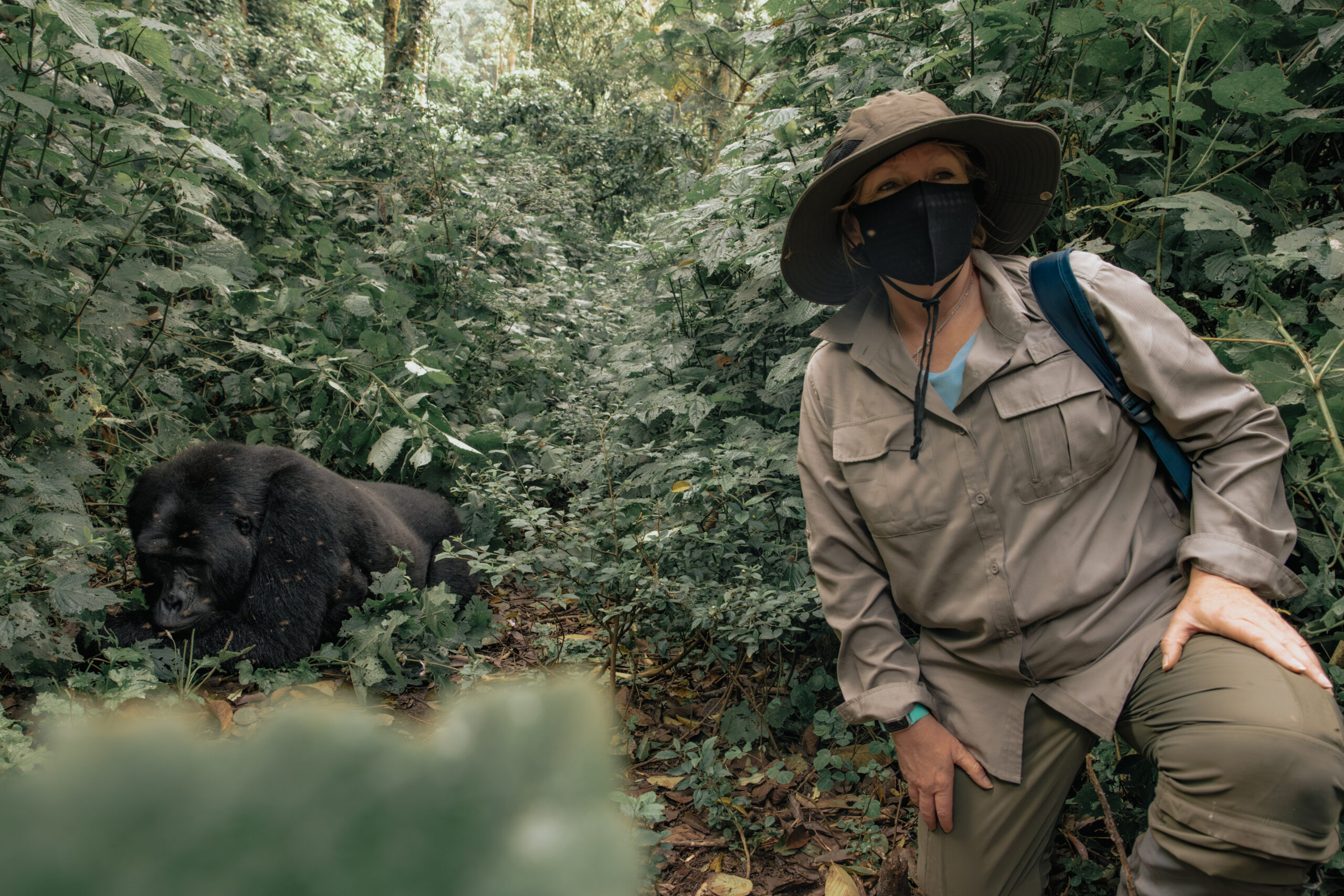
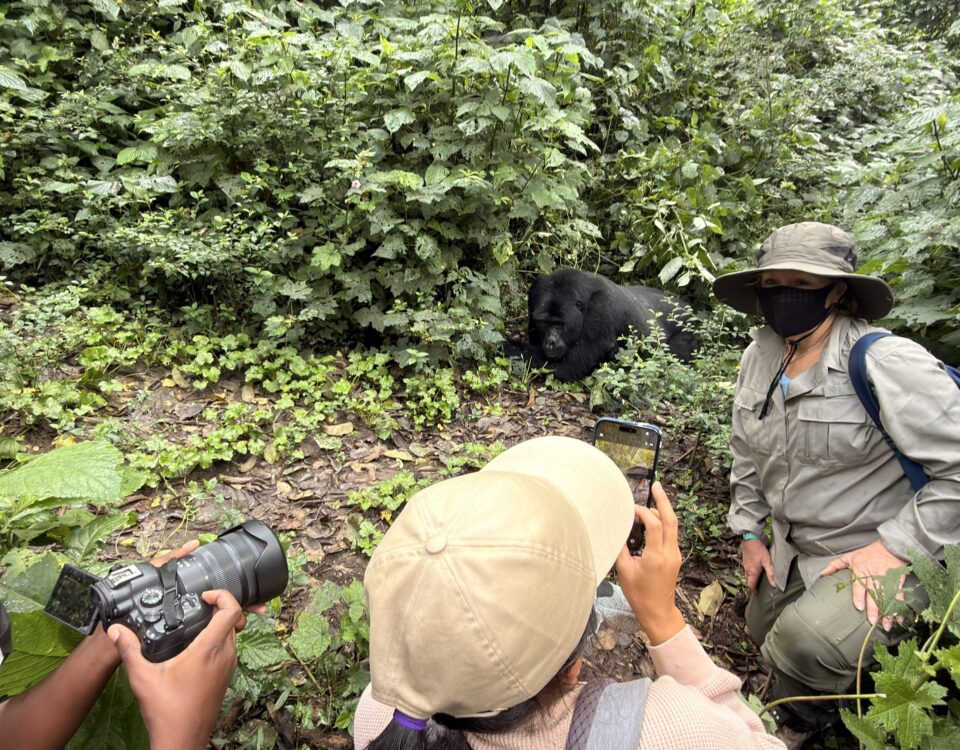
You’ll know the moment is close before you even see them. The forest goes quiet in a very specific way, or you’ll catch a low, rumbling grunt echoing through the brush. Your tracker will stop, turn back to you with a quiet smile, and signal for everyone to drop their hiking poles and daypacks with the porters. This is also the exact moment to reach into your pocket, pull out your face mask, and slip it on before stepping forward. From here, you take only your camera, your mask—and your breath for the last few yards.
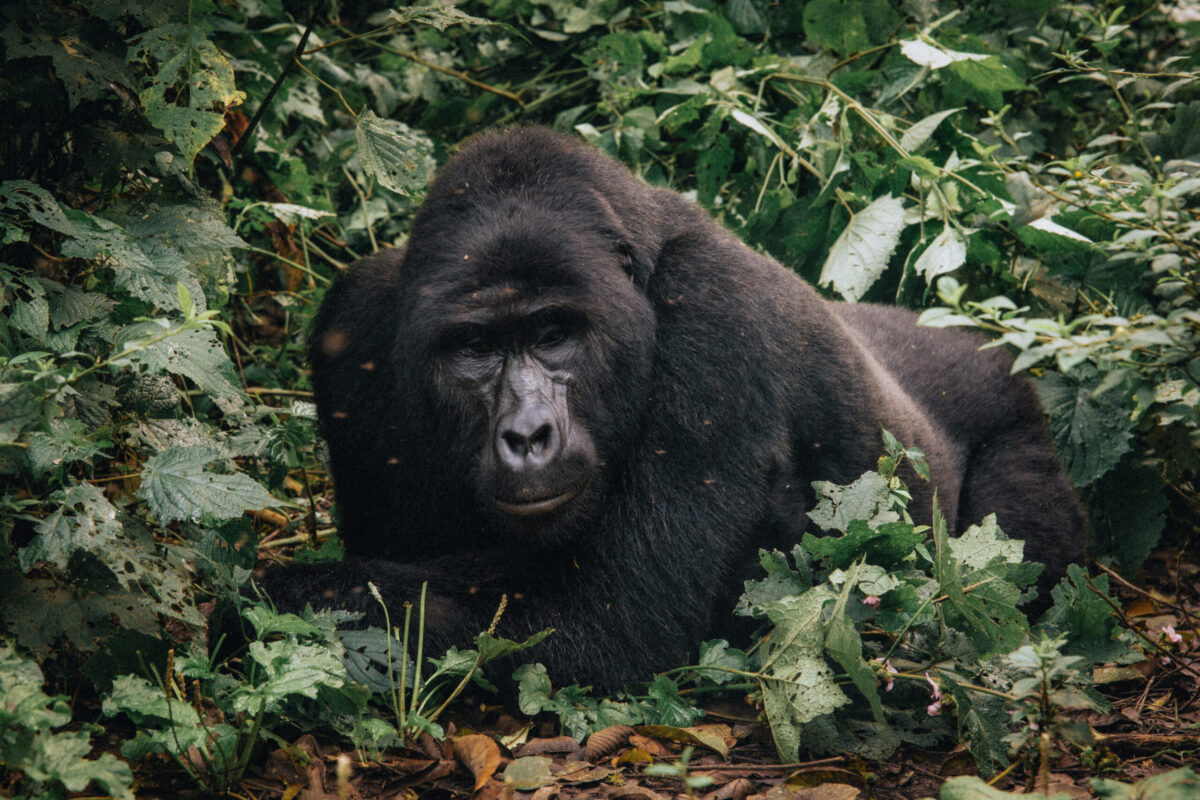
Parting those thick green vines for the first time is hard to describe. Suddenly, right there in front of you, is a family of wild mountain gorillas quietly going about their day. You might see a couple of energetic youngsters wrestling in the vegetation or swinging from low branches, while a massive, velvet-black silverback rests nearby, watching over his family with complete calm. It takes a second for your mind to process that you are standing just meters away from them in their natural habitat.
Once everyone is quietly settled, your official hour begins. Those 60 minutes go by faster than you think, but it is strictly guarded. It gives you enough time to soak in the encounter without crowding the family or disrupting their natural daily routine.
While we always aim to keep a 10-meter gap, mountain gorillas don’t know about distance rules. Curiosity gets the better of toddlers, and adults often wander wherever the sweetest leaves are. If a gorilla turns and walks your way, don’t freeze up in fear. Your ranger will softly nudge you to crouch down, stay still, and casually look away. In forest language, averting your gaze simply tells the silverback, “I’m just a guest here, and I mean no harm.”
Step 5: The Trek Back
When your ranger signals the hour is up, you softly step away, leaving the family to their quiet afternoon. A short walk down the trail brings you to a quiet forest clearing where you unwrap packed lunches, sit on mossy logs, and finally let out the quiet breaths you’ve been holding—trading wide-eyed smiles as the magic of what just happened sinks in.
The journey back down the mountain always feels different. The trail is much quieter—partly from tired knees from the strenuous slopes, but mostly because everyone is lost in their own thoughts, replaying every moment of that encounter.
Back at the ranger post, your lead ranger hands you an official UWA gorilla trek certificate. It’s a humble piece of paper, but holding it feels incredible—a proud badge of honor marking your contribution to mountain gorilla conservation.
The Post-Trek Reality: Conservation & Community
While most guides stop at packing lists and ranger briefings, it’s just as important to consider how your visit impacts the communities living right along the forest edge. When local families directly benefit from tourism, protecting the forest and its gorillas becomes a shared effort that benefits everyone.
Before Bwindi Impenetrable and Mgahinga were gazetted as national parks in the early 1990s, local communities—including the indigenous Batwa people—relied directly on the forest for food, medicine, and firewood. Creating a protected sanctuary meant human activity inside the borders stopped overnight.
To make conservation sustainable, a system was built where tourism directly supports local livelihoods:
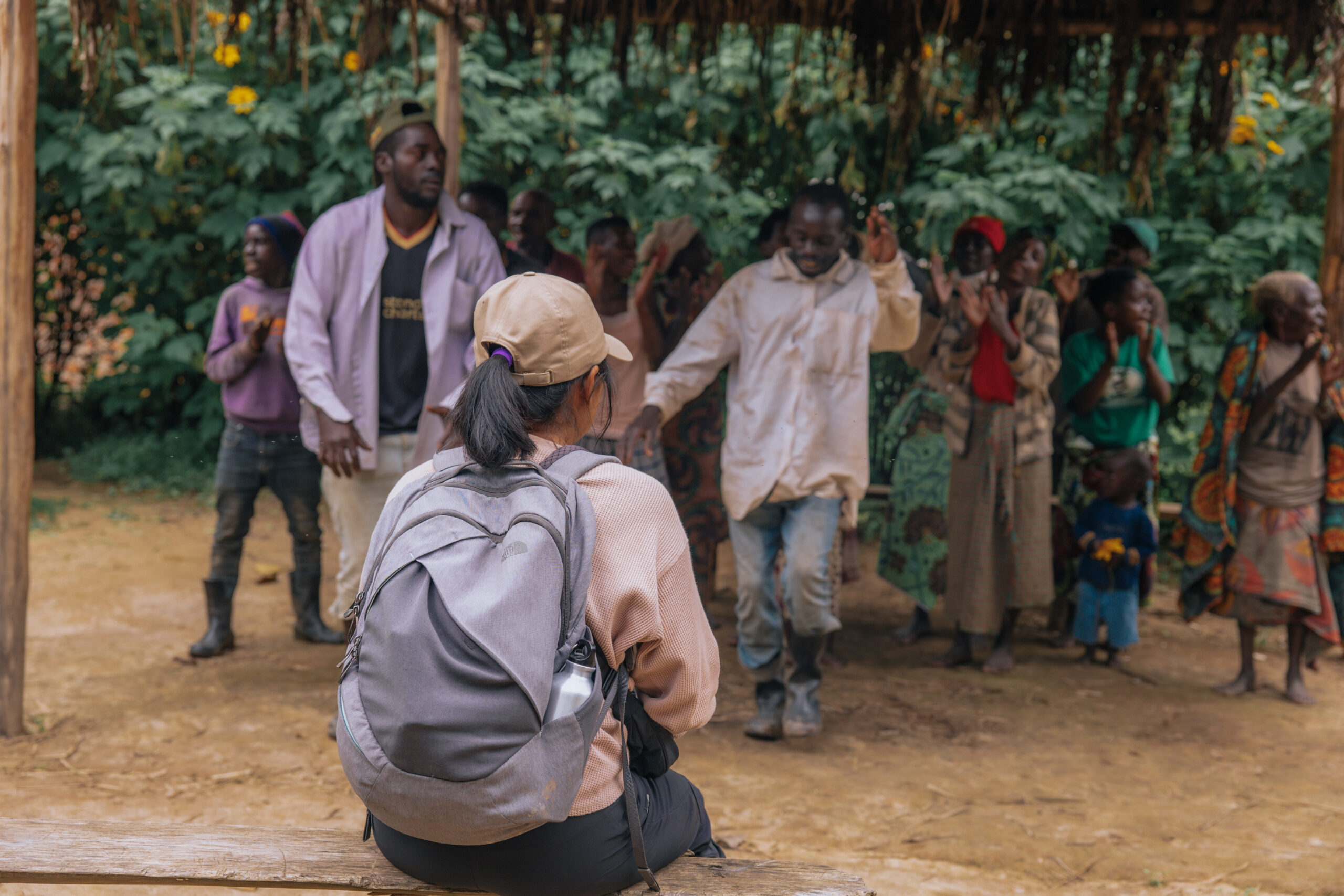
- Revenue Sharing: 20% of annual park revenue goes directly to neighboring communities to fund local schools, clean water boreholes, and health clinics.
- Direct Employment: Beyond ranger staff, the community supplies the vital network of trackers, porters, lodge staff, driver-guides, and local artisans. When you hire a porter for $20 USD or purchase a handcrafted souvenir at the briefing post, that income goes directly to a household bordering the park.
- Conflict Mitigation: Gorillas do not observe park boundaries. They frequently wander out into nearby community farmland to forage on sweet potato vines and eucalyptus trees. Tourism revenue helps fund crop buffer zones and community ranger patrols to keep gorillas safely inside the forest bounds while protecting local livelihoods.
When you step into the forest, you aren’t just paying for a bucket-list wildlife encounter—you are directly sustaining a conservation ecosystem that makes human-gorilla coexistence possible.
Permit Costs & Policies
Official Uganda Wildlife Authority (UWA) gorilla permits are $800 USD per person for standard trekking (1 Hour) or $1,500 USD for gorilla habituation (4 Hours), strictly reserved for guests aged 15 and older. Because availability is capped daily, permits must be booked months in advance through your tour operator.
Getting There: Transport & Accessibility
You can reach Bwindi by taking a 1-hour domestic flight from Entebbe to Kihihi or Kisoro airstrips, followed by a short scenic transfer to your lodge. Alternatively, it is a 10-hour overland drive from Entebbe/Kampala, or a popular 4-hour drive across the border from Kigali, Rwanda.
Frequently Asked Questions (FAQs)
Do I really need hiking poles or garden gloves?
Yes, but poles aren’t required since sticks are provided. Your lead ranger will offer you a wooden walking stick at the briefing, which helps tremendously on steep, wet slopes. Rubber-coated garden gloves protect your hands when grasping prickly vines or steadying yourself on damp embankments.
What happens if I can’t keep up with the group’s pace?
No one is ever left behind. UWA rangers pace the trek to match the slowest group member, and trackers ahead constantly coordinate via radio. If you need a breather, just speak up—taking brief water breaks is completely normal on steep climbs.
Are mountain gorillas aggressive or dangerous to humans?
Habituated gorilla families are accustomed to peaceful human presence and are remarkably calm. Silverbacks are naturally protective, but aggression is extremely rare as long as you follow your ranger’s instructions: avoid eye contact, speak softly, and make no sudden movements.
Can I go gorilla trekking if I have physical mobility limitations or disabilities?
Yes. Sedan chairs (often called “African helicopters”) carried by teams of local porters are available for hire at park headquarters for visitors who cannot hike steep slopes. Inform your tour operator in advance so arrangements can be made with park authorities on the morning of your trek.
Can I bring food or water into the forest?
Yes, bring plenty of drinking water (at least 2 liters) and a packed lunch provided by your lodge. You can eat and drink during rests along the trail, but eating or drinking near the gorillas is strictly forbidden.
What happens if it rains during our trek?
Gorilla treks go ahead rain or shine. Rainforest downpours can happen unexpectedly at any time of year. Always pack a lightweight waterproof jacket, cover your camera gear in a dry bag, and keep moving—the forest canopy provides decent cover.
Trek with Jackal Adventures
A gorilla trek is a major highlight, but the details behind it—securing UWA permits, choosing the right sector for your fitness, and organizing reliable ground transport—require real local knowledge. At Jackal Adventures, we live and work right here in Uganda. We handle every logistical step so you can walk into the rainforest confident, prepared, and focused on what truly matters: meeting mountain gorillas in the wild.



1 Comment
[…] for 2026: As of July 2024 and extending through June 30, 2026, the official price for a Uganda Gorilla Trekking permit is $800 USD for Foreign Non-Residents. Permits must now be booked by sector (e.g., Buhoma, […]