
The Gorilla Trekking fitness test: Are you actually ready for Bwindi
February 11, 2026
The Ultimate Guide to Gorilla Trekking in Uganda
February 11, 2026
Which Gorilla Trekking Experience Is Better?
Uganda is one of only four places in the world where you can trek mountain gorillas, and uniquely, it offers two separate parks to do it in: Bwindi Impenetrable National Park and Mgahinga Gorilla National Park. Both give you a genuine hour with a habituated gorilla family. The experience of getting there, though, is very different — different terrain, different scale, different atmosphere entirely. Here’s an honest comparison to help you decide which one actually fits your trip.
Understanding the Landscapes
Bwindi: The Ancient Rainforest
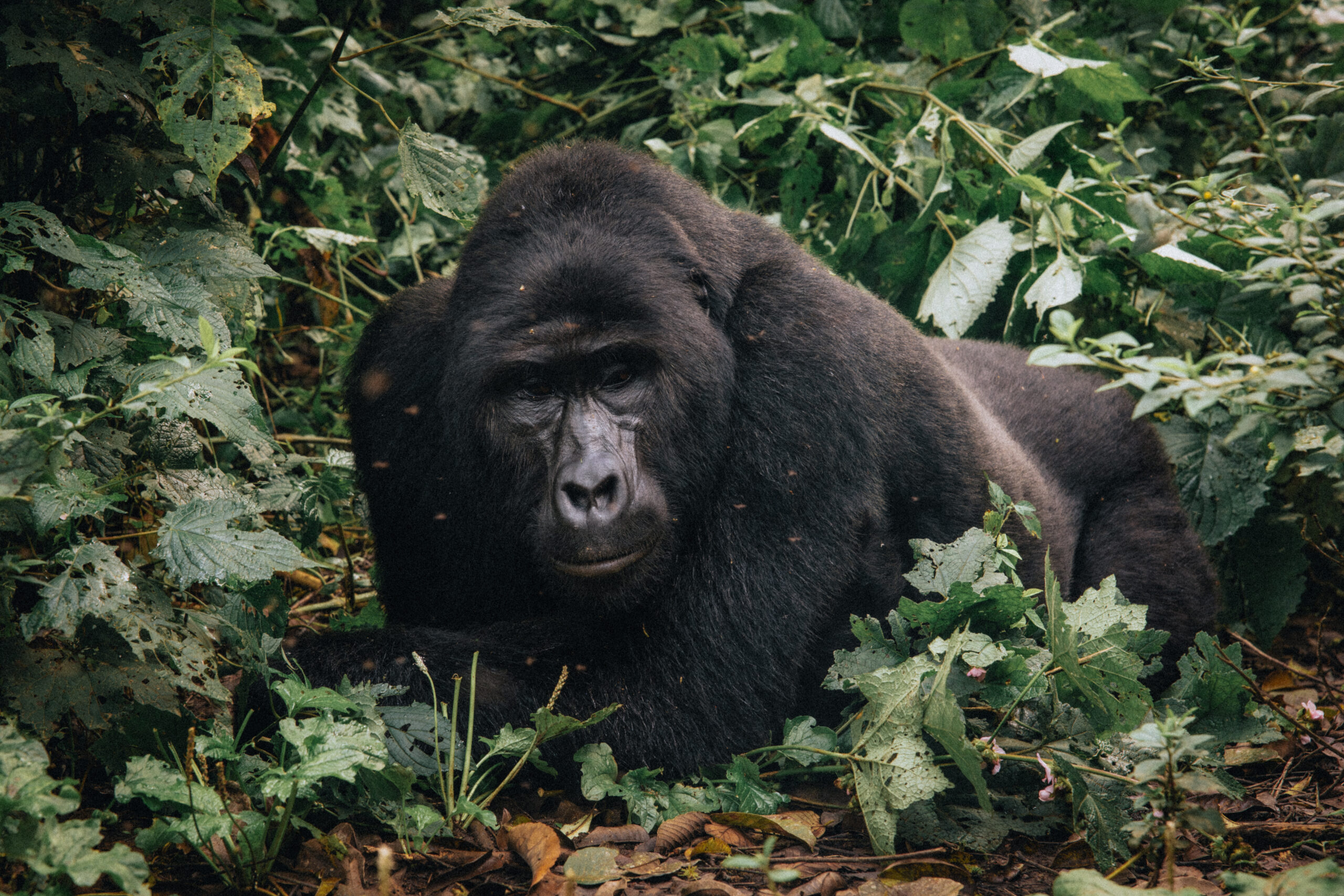
Bwindi is a UNESCO World Heritage Site, and for good reason — this rainforest dates back over 25,000 years. Its name translates to “a place of darkness,” a reference to how thick the canopy is overhead. Trekking here feels genuinely prehistoric: steep ridges, slippery valleys, and dense undergrowth that demands a real level of fitness.
Mgahinga: Where Gold Meets Silver
Mgahinga is Uganda’s smallest national park, part of the larger Virunga Massif shared with Rwanda and the DR Congo. Three extinct volcanoes — Mount Gahinga, Mount Muhabura, and Mount Sabyinyo — dominate the landscape, and the vegetation is mostly bamboo forest rather than dense jungle. Because it’s more open than Bwindi, photographers often find it easier to get clear shots.
Direct Comparison: Bwindi vs Mgahinga
Gorilla Families and Permit Availability
Bwindi is the heavyweight of gorilla tourism in Uganda. With four sectors — Buhoma, Ruhija, Rushaga, and Nkuringo — and over 20 habituated families, permits are far easier to secure here, even in peak season (June to August).
Mgahinga, by contrast, has only one habituated group: the Nyakagezi family. With just eight permits issued per day, the experience is genuinely exclusive. The Nyakagezi group used to move across the border into Rwanda and Congo for extended periods, but they’ve stayed stable in Uganda for over a decade now.
The Gorilla Habituation Experience — A Bwindi Exclusive
One real differentiator worth knowing before you decide: the Gorilla Habituation Experience is only available in Bwindi, specifically in the Rushaga sector. Instead of the standard one-hour visit, you spend up to four hours with a gorilla family that’s still in the process of becoming accustomed to humans, alongside the researchers and trackers doing that work. It costs $1,800 per person, on top of the standard permit structure, and only a handful of permits are issued per day.
This isn’t available in Mgahinga at all — the single Nyakagezi family there is only open to standard one-hour treks. If spending significantly more time with the gorillas is a priority for you, that alone may settle the decision in Bwindi’s favor.
The Trekking Experience: Difficulty and Vibe
The Challenge of Bwindi
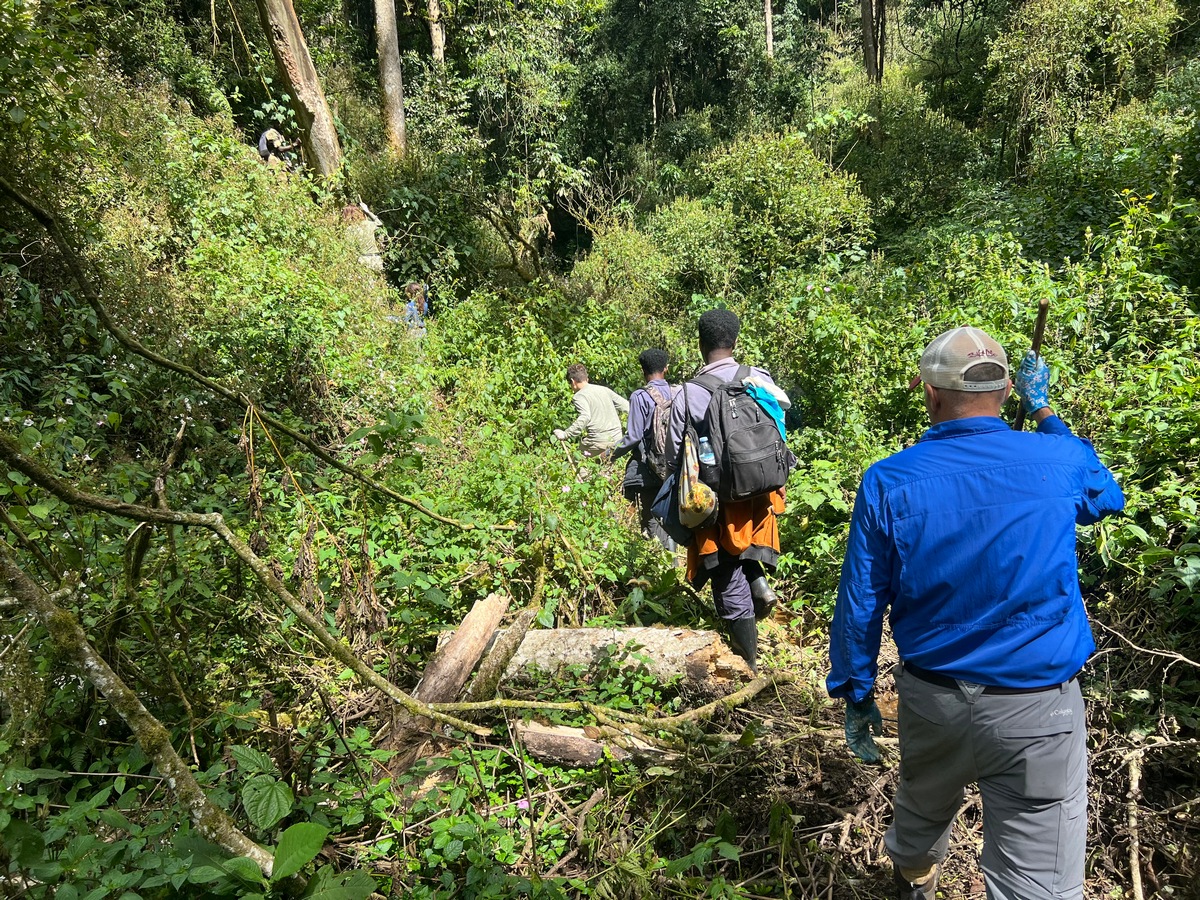
Bwindi is typically the more physically demanding of the two. Rangers often cut trails on the spot through thick vines and ferns, and depending on where the gorillas nested the night before, your hike could take anywhere from two to seven hours. It’s a real forest expedition — but the payoff is an immersive experience that few places on earth can match.
The Scenery of Mgahinga
Trekking in Mgahinga generally feels a little easier, thanks to the more open bamboo forest. The elevation is higher, which can affect your breathing if you haven’t acclimatized, but the volcanic views are genuinely dramatic. Many photographers prefer it here since light reaches through the bamboo far more easily than Bwindi’s dark canopy.
Beyond the Gorillas: What Else Can You Do?
In Bwindi, you can pair your trek with birdwatching (over 350 recorded species) or a Batwa Cultural Experience, where the forest’s original inhabitants share their traditional survival knowledge. Bwindi is also the only place in East Africa where you might hear chimpanzees while tracking gorillas.
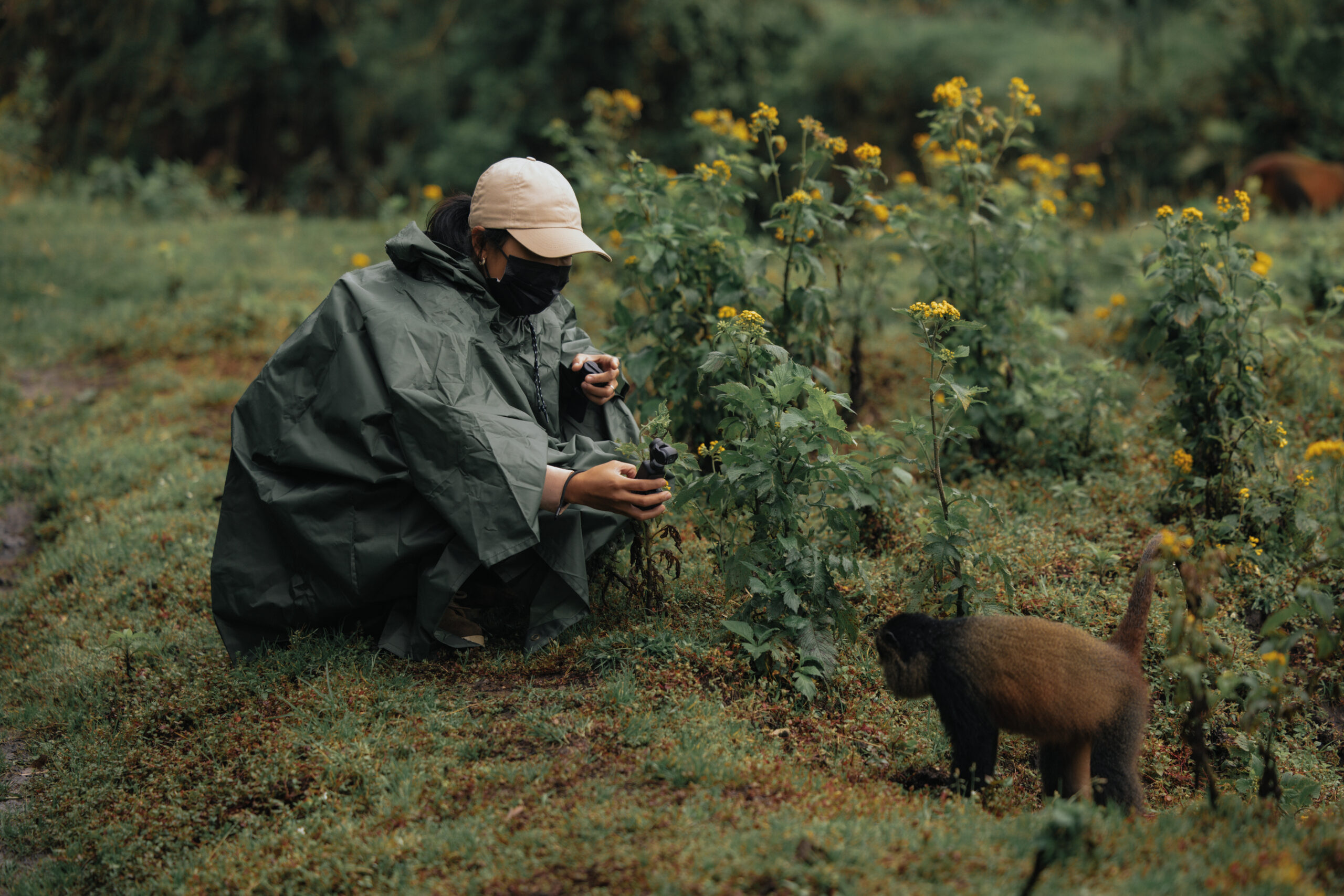
In Mgahinga, the standout add-on is golden monkey trekking — the only place in Uganda where you can pair gorillas and golden monkeys in a single trip. It’s also a serious destination for volcano hiking; the Mount Sabyinyo climb lets you stand in Uganda, Rwanda, and the DRC at the same time.
Community Impact: Where Your Permit Money Goes
This part rarely gets mentioned, but it’s worth knowing: permit fees don’t just fund conservation; they directly support the communities living around these parks. The Uganda Wildlife Authority shares 20% of annual park revenue with neighboring communities, and at Bwindi specifically, $10 from every single gorilla permit sold goes straight to community development projects. Every trek you take is, in a small but real way, an investment in the people who live alongside these forests.
Permit Costs and Logistics
The Uganda Wildlife Authority sets uniform permit pricing across both parks — the park you choose doesn’t change the cost:
- Foreign Non-Residents: $800
- Foreign Residents: $700
- Rest of Africa: $500
- East African Citizens: UGX 300,000
One thing worth knowing regardless of which park you choose: as of March 2026, UWA requires permits to be paid in full at the time of booking — the previous 7-day reservation window no longer exists. Whichever park you decide on, book and pay early rather than trying to hold a date.
Both parks sit in southwestern Uganda. Most travelers drive 8 to 9 hours from Entebbe or Kampala. Alternatively, you can fly into Kisoro Airstrip (for Mgahinga or southern Bwindi) or Kihihi Airstrip (for northern Bwindi). A popular alternative route is flying into Kigali, Rwanda, and driving roughly 4 hours across the border, which can save significant time.
Accommodation
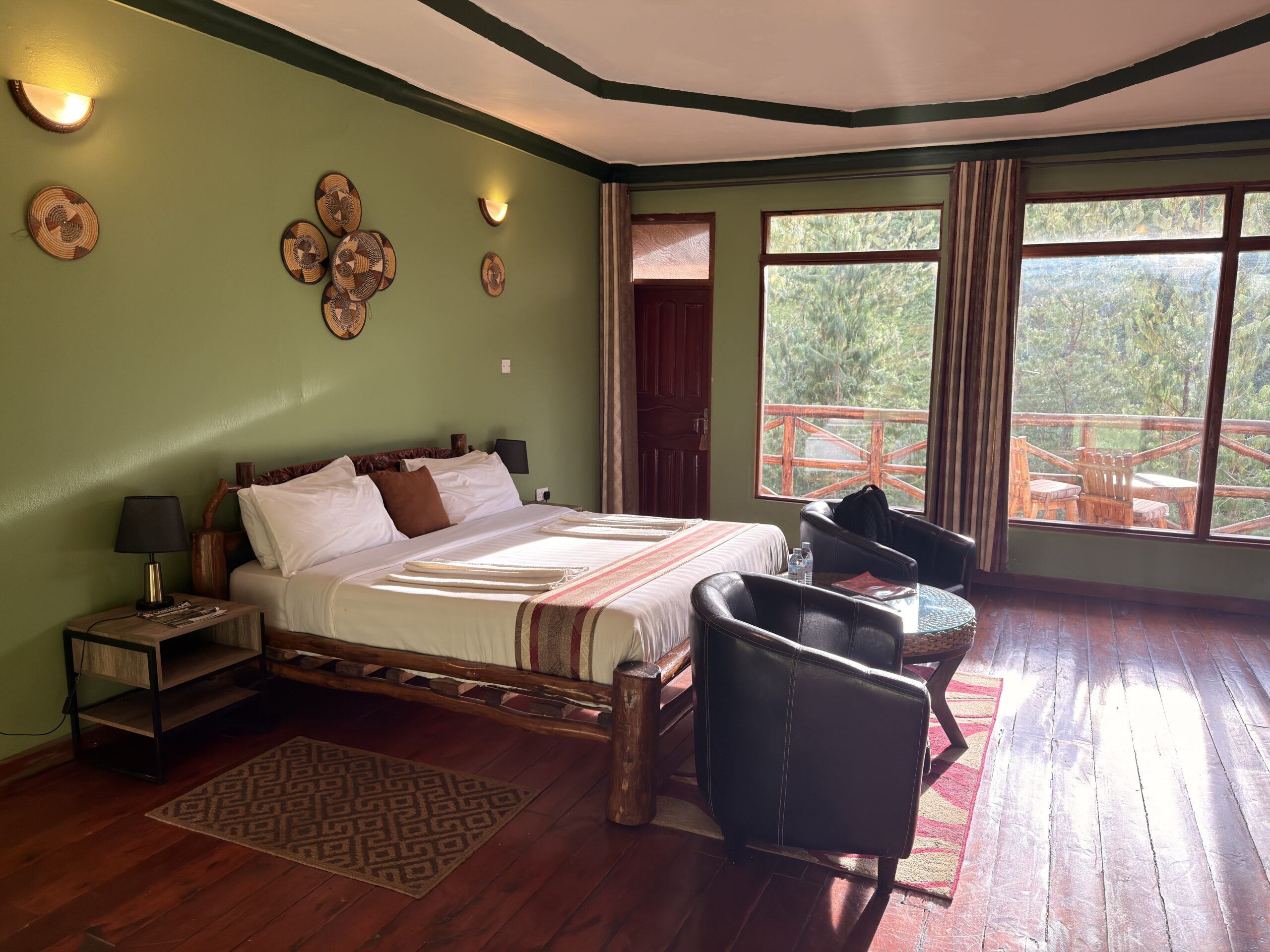
Bwindi has a wider range of comfortable and luxury lodge options simply because it’s a larger, more established tourism area, with lodges positioned around each of its four sectors. Mgahinga has fewer options overall, but what’s there tends to be well-positioned, with several lodges offering direct volcano views. Wherever you stay, we only work with properties that meet a genuine mid-range or luxury standard — comfort and quality aren’t something we compromise on for either park.
The Verdict: Which Should You Choose?
Most first-time guests who ask us this question end up in Bwindi, and it’s usually less about Bwindi being “better” and more about permit flexibility — when you’re planning a trip around fixed flights and limited vacation days, having 160+ permits a day instead of 8 just makes logistics easier. Mgahinga tends to be the choice for guests who’ve already done Bwindi before, or who specifically want the golden monkey pairing and don’t mind the added planning pressure of far fewer available dates.
Choose Bwindi if:
- You want a guaranteed permit for specific dates
- You’re interested in the Gorilla Habituation Experience
- You want to experience a UNESCO-protected, “impenetrable” jungle
Choose Mgahinga if:
- You prefer a quiet, off-the-beaten-path atmosphere with fewer crowds
- You want to pair gorillas and golden monkeys in one trip
- You’re a photographer looking for open light and volcanic backdrops
Frequently Asked Questions
Can I visit both parks on the same trip?
Yes — some itineraries combine a Bwindi trek with a Mgahinga add-on, particularly for travelers who also want golden monkey trekking. This needs to be planned in advance given Mgahinga’s limited permit availability.
Is one park safer than the other?
Both parks are well-regulated and considered safe for tourism. The main practical difference is trekking difficulty and remoteness, not safety.
Does the Habituation Experience cost the same in Bwindi as a standard permit?
No — it’s a separate, additional product at $1,800 per person, on top of and distinct from the standard $800 permit.
Which park is better for first-timers?
Bwindi is usually the more forgiving choice for a first gorilla trek, mainly because of permit flexibility — if your dates are fixed, Bwindi’s much larger daily permit allocation makes planning considerably easier.
Trek With Jackal Adventures
Whether you choose the misty valleys of Bwindi or the volcanic slopes of Mgahinga, a successful trek comes down to having the right team on the ground. We handle every logistical detail — securing your permit, choosing the right lodge, and matching the experience to your fitness level and interests — so you can focus entirely on that one hour with the gorillas.



1 Comment
[…] ascending or descending. The elevation is another factor that visitors frequently underestimate. Bwindi sits at altitudes ranging from 1,160 to 2,607 meters (3,806 to 8,553 feet). If you arrive directly […]